A safe that won’t open properly puts everything inside it out of reach. Fair Locksmith diagnoses the fault precisely and restores reliable access without unnecessary drilling.

A safe that won’t open properly puts everything inside it out of reach. Fair Locksmith diagnoses the fault precisely and restores reliable access without unnecessary drilling.
Safes protect what matters most, so a malfunctioning lock deserves urgent, careful attention. We diagnose the issue precisely and restore access without resorting to unnecessary drilling.
Safe issues are treated seriously, with technicians responding promptly to restore reliable access.
Safe mechanisms require particular expertise, which our technicians bring to every single job.
Every technician verifies their identity first, protecting you before any repair work starts.

Forgetting a safe’s combination is more common than most people would ever admit. This can happen after years of infrequent use or a simple lapse in memory. Fair Locksmith technicians can safely regain access without resorting to damaging drilling methods. This service offers genuine relief for anyone locked out of their own valuable safe. We handle every combination issue with patience, skill, and complete discretion.

Internal bolts inside a safe can jam due to wear, dust, or minor misalignment. This can prevent the door from opening even with the correct combination entered. Our technicians diagnose and free jammed bolts carefully, restoring smooth and reliable operation. This issue is common in safes that haven’t been serviced in quite some time. We resolve it precisely, protecting both the safe and its contents.
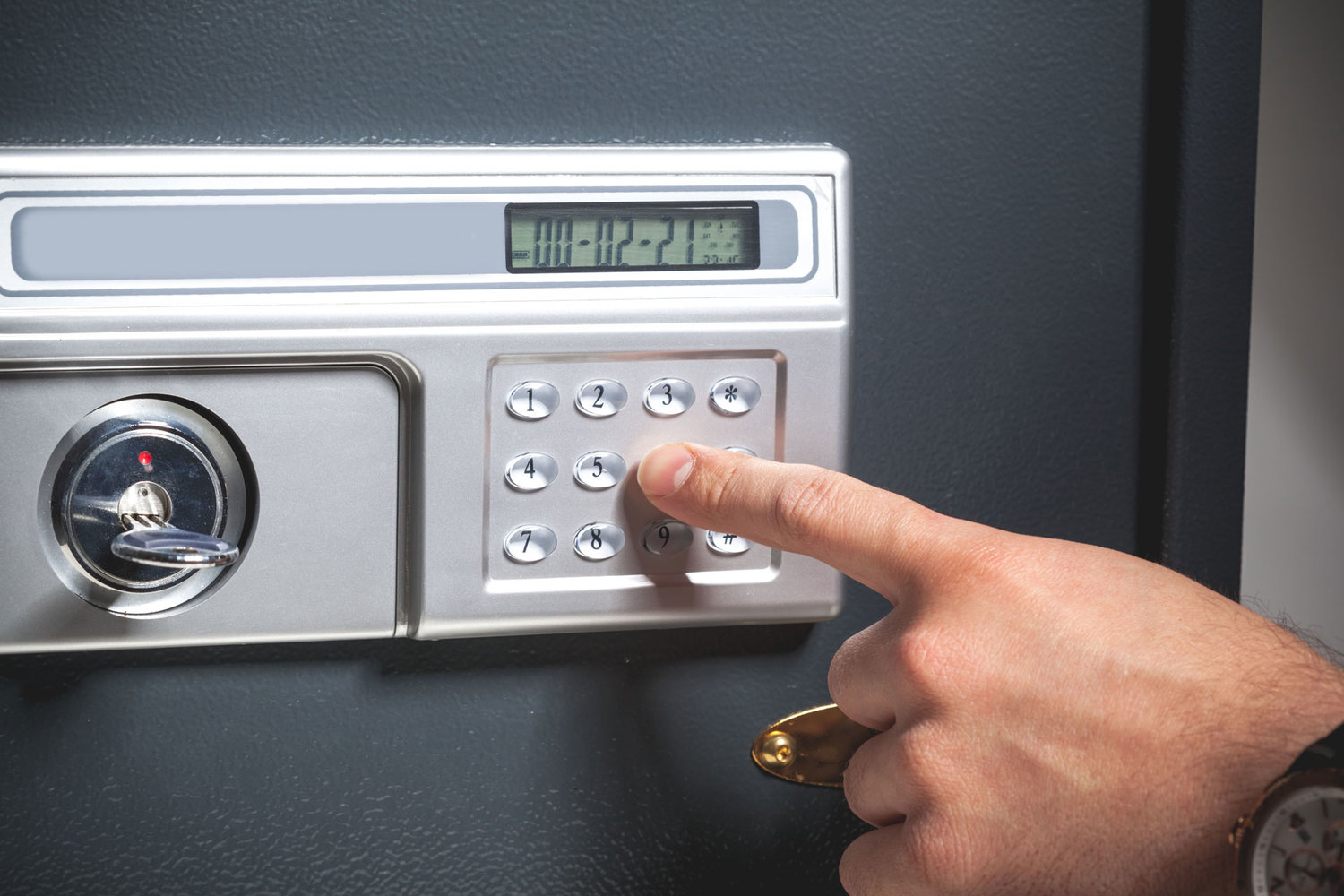
Digital safe locks can occasionally develop faults affecting keypad response or battery function. This can leave you locked out despite entering the correct code repeatedly. Fair Locksmith technicians diagnose electronic faults accurately, repairing or replacing components as genuinely needed. This issue is becoming more common as more safes shift toward digital locking systems. We restore reliable function so your safe operates dependably once again.
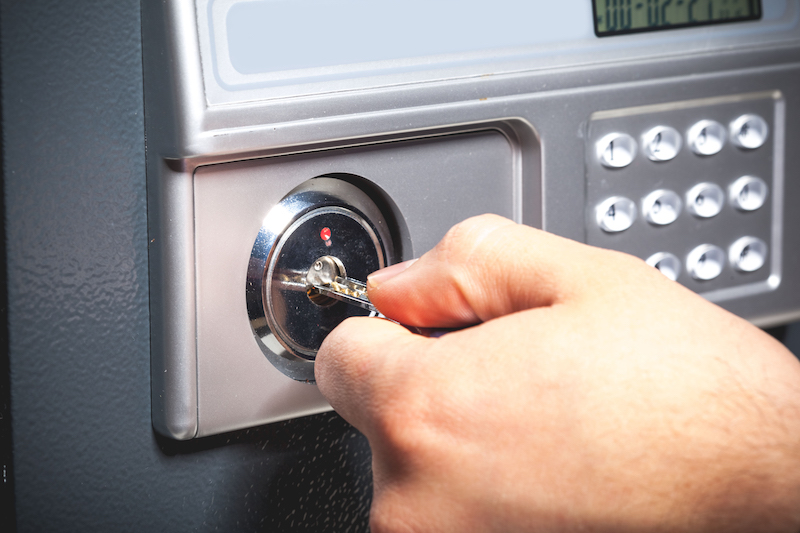
Older safes naturally become less reliable as internal components wear down over the years. What once opened smoothly can gradually become stiff, resistant, or occasionally unpredictable. Our technicians assess ageing safes and repair components to restore dependable, everyday function again. This is common among long-held family or business safes used for many years. We provide honest advice on repairing versus replacing older units.
A safe is the most concentrated point of security in any home or business — the place where the items that matter most are stored precisely because they are too valuable, too sensitive, or too irreplaceable to leave in general circulation. Documents whose loss would be catastrophic. Jewellery with financial and sentimental value that no insurance payout could genuinely replace. Business records, cash holdings, and digital storage devices whose compromise would have serious consequences. The entire premise of a safe is that it protects these items reliably — and when the lock mechanism that makes that protection possible begins to fail, or fails completely, the safe stops being a security asset and becomes a source of significant anxiety instead.
At Fair Locksmith, we provide a professional safe lock repair service for residential and commercial properties right across Reservoir and the surrounding northern Melbourne suburbs. Our licensed technicians bring the specialist knowledge, the precision diagnostic tools, and the careful hands that safe lock work demands — identifying the true nature of every lock fault accurately, carrying out repairs that restore genuine reliable function, and doing all of it at a price that reflects what the work actually involves rather than what a captive client situation might allow us to charge. Safe lock repair requires more technical expertise than most locksmith tasks — and at Fair Locksmith, that expertise is provided at a fair price every time.
Safe lock repair is not an extension of standard door lock repair — it is a distinct technical discipline that requires specific knowledge of safe lock mechanism types, specific tools suited to working within the confined spaces and precise tolerances of safe construction, and a specific understanding of the secondary security features that safes incorporate to resist manipulation. Understanding why safe locks differ from door locks helps explain why professional repair is always the correct response to safe lock failure:
Safe lock mechanisms — particularly mechanical combination dial systems — operate within tolerances that are considerably tighter than standard residential lock mechanisms. The alignment of combination discs, the positioning of drive cams, and the depth of gate notches that allow the fence to drop and the boltwork to retract are all specified in fractions of a millimetre. Diagnosing and repairing faults within these tolerances requires both specific measuring tools and the patience to work at the level of precision the mechanism demands.
Premium safes incorporate secondary security features — relockers, glass relocker plates, hardened steel anti-drill barriers, and anti-manipulation mechanisms — that are designed to trigger and permanently block access under certain conditions that may overlap with repair procedures if those procedures are not carried out with full awareness of these features. A safe lock repair performed without understanding the specific secondary security architecture of the safe model being worked on risks triggering a relocker that makes the safe genuinely unopenable without destructive methods.
In a safe, the lock mechanism does not operate independently — it integrates with a boltwork system that physically extends steel bolts into the safe door frame when locked and retracts them when the correct combination is entered. Diagnosing a safe lock fault requires understanding not just the lock mechanism itself but its integration with the boltwork — because boltwork faults, spring failures, and door alignment issues frequently present as lock faults and require different repair approaches.
Our safe lock repair capability covers the complete range of fault types encountered across the residential and commercial safe population in Reservoir and the northern Melbourne area:
The most complex safe lock type from a repair perspective, mechanical combination dial systems incorporate multiple interacting components — the dial, the drive spindle, the drive cam, the combination discs, the fence, and the boltwork integration — any of which can develop faults that prevent correct operation. Common mechanical combination lock faults we repair include:
Modern residential and commercial safes commonly use electronic keypad locks that develop their own specific failure modes distinct from mechanical system faults:
Fingerprint-based safe locks develop specific fault patterns related to their biometric scanning technology:
Faults that originate in the boltwork rather than the lock mechanism itself — but which prevent the safe from opening correctly even when the lock operates normally:
Our technician begins by identifying the safe manufacturer, model series, and production era — information that determines the specific internal architecture of the lock and boltwork system, the location and nature of any secondary security features, and the correct diagnostic and repair procedures for this specific safe. We never approach a safe lock repair without understanding the specific mechanism we’re working with.
Before performing any work on a safe, we require satisfactory proof of ownership — purchase documentation, insurance records listing the safe, a statutory declaration, or equivalent verification. This is an absolute requirement regardless of the urgency of the situation or the apparent certainty of the ownership claim. The security value of a safe depends entirely on it remaining accessible only to its rightful owner — and we take our role in maintaining that integrity seriously.
Before opening any access panel or beginning internal work, our technician conducts a thorough external assessment — testing the dial or keypad response, listening for mechanism sounds during operation, checking door alignment and frame condition, and assessing any visible damage or evidence of previous repair or manipulation attempts. This external assessment frequently reveals important diagnostic information before the mechanism is accessed.
Accessing the safe lock mechanism for repair requires removing the internal door panel or accessing the mechanism through the safe’s service access provisions — procedures that vary significantly between safe models and must be carried out with full awareness of any secondary security features that could be triggered during access. We work methodically and carefully through this step, never rushing in a way that risks activating a relocker.
With access to the mechanism achieved, our technician diagnoses the fault with precision — identifying the specific component or alignment issue responsible for the lock failure and assessing whether related components show wear or damage that should be addressed simultaneously to prevent a return fault.
Using quality replacement components appropriate for the specific safe model and lock type, we carry out the repair at the component level — replacing worn discs, fatigued springs, failed electronic components, or damaged boltwork elements as the diagnosis requires. We carry a range of safe lock components covering the most common residential and commercial safe brands encountered across Reservoir.
Following mechanical or electronic repairs, we verify the correct combination or access code operation through multiple complete dial cycles or code entry sequences before considering the repair complete. Where the repair has involved combination disc repositioning or electronic system reset, we establish and verify a confirmed working combination or code before closing the safe and reinstalling the door panel.
Before completing the repair, we verify that all secondary security features — relockers, glass plates, anti-drill barriers — are correctly positioned and functioning as designed. A safe whose primary lock has been repaired but whose secondary security has been inadvertently compromised during the repair process is not a correctly repaired safe.
We test the complete lock and boltwork system through multiple full cycles — locking, dialling or entering the code, and unlocking — confirming consistent, reliable operation before reinstalling the internal door panel and returning the safe to full service.
Our safe lock repair capability covers a broad range of safe types and brands commonly found in Reservoir homes and businesses:
Our safe lock repair service covers Reservoir and the surrounding northern Melbourne suburbs including Thomastown, Heidelberg, Preston, Bundoora, Lalor, Epping, Northcote, Coburg, Fawkner, and Mill Park. We come to your location with the specialist tools and knowledge to handle most safe lock repairs on site — no need to transport your safe to a workshop.
Don’t leave your most valuable possessions inaccessible — and don’t pay inflated safe repair prices that take advantage of the urgency a locked safe creates. Fair Locksmith provides professional, precise, and genuinely fairly priced safe lock repair services across Reservoir and the surrounding northern suburbs — diagnosing faults accurately, repairing them correctly, and charging you a price that honestly reflects the skilled work involved. Call us today and let our licensed technicians restore reliable access to your safe — and genuine peace of mind about the security of everything inside it.
Same-Day Appointments Available
In many cases yes, though identifying the brand helps us source compatible parts faster.
No, drilling is generally a last resort after other repair methods have been tried.
Yes, older mechanisms can often be upgraded to more modern, reliable locking systems.
Yes, we service both residential and commercial safes across various sizes and types.
If the body and door are structurally sound, repair is usually the better option.
